

Asian Ban Asbestos Mobilization 2026
On October 20 & 21, 2026 campaigners from countries throughout the Asia-Pacific region gathered together in Kuala Lumpur, Malaysia for the annual Asian Ban Asbestos Network (ABAN) conference.1
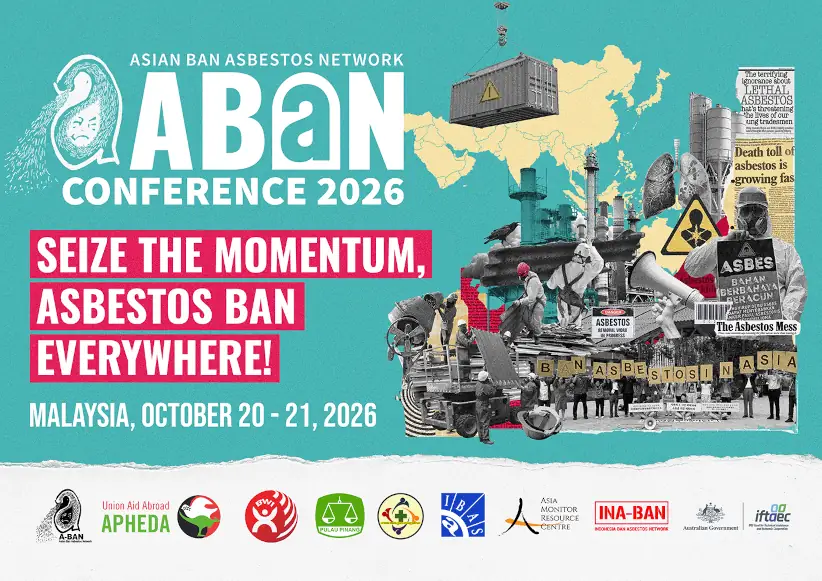 |
The scores of participants from 16 Asian countries plus Australia included: asbestos victims, patients and their representatives, disaster relief workers, trade unionists, medical professionals, academics, consumer rights’ and environmental campaigners. The global importance of this event was underscored by the greetings received from asbestos victims’ groups, campaigning organizations and individuals in Europe, Australia, North and Latin America. In her solidarity message, the Coordinator of the International Ban Asbestos Secretariat (IBAS) Laurie Kazan-Allen recalled ABAN’s birth in Hong Kong (2009) and highlighted the importance of the in-person nature of the October 2026 event:
“We hope that the days to come will be as productive as they are enjoyable and that the new friends you make in Kuala Lumpur will be a source of professional strength and personal support for years to come. The most valuable resource in the ABAN ban asbestos campaign is: YOU! Each one of you has an invaluable role to play in this life-saving campaign to save human life and protect our planet. The future is in your hands!”
The timing on the ABAN 2026 conference was serendipitous as it came in the wake of recent successes in Asia and beyond. The name of the event: “Seize the Momentum, Asbestos Ban Everywhere” aptly set the stage for what was to follow.
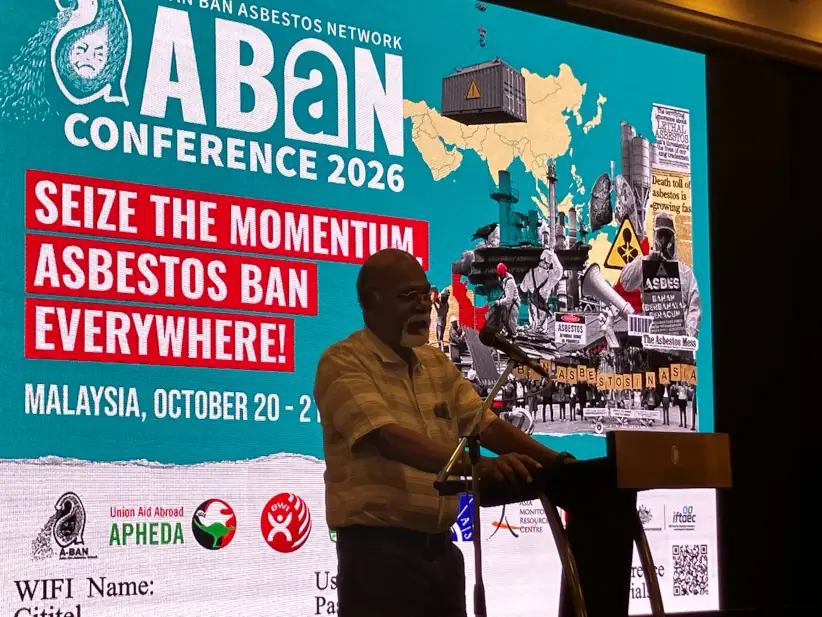 Dr Jayabalan A. Thambyappa from Malaysia’s Health & Safety Advisory Centre welcoming delegates to the ABAN Conference. Picture courtesy of ABAN. |
Welcoming delegates to Malaysia, Dr Jayabalan A. Thambyappa – referred to as Dr Jaya by his friends – described in detail Malaysia’s long road to an asbestos ban and the obfuscation strategies still being used by vested interests to forestall further government action. A fruitful discussion followed comparing the experiences in Malaysia to those in other countries.
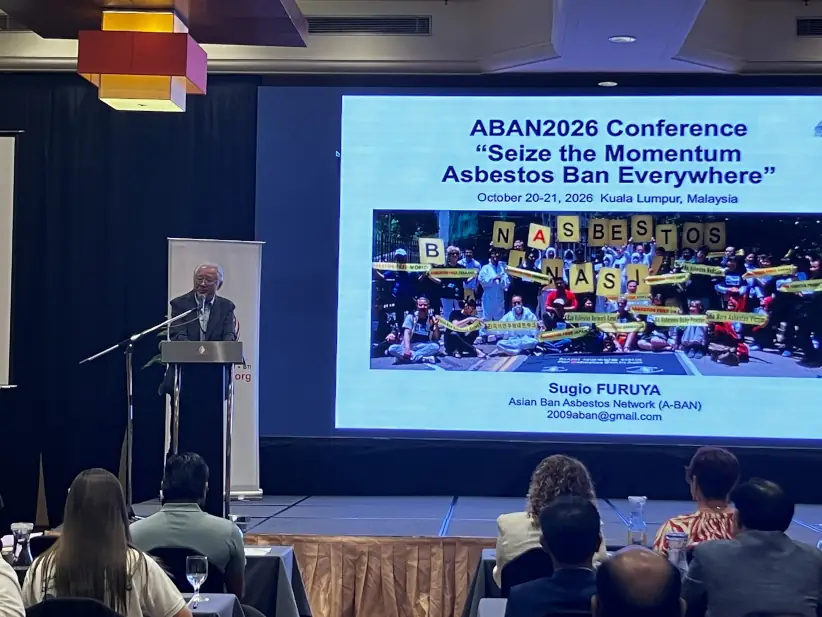 ABAN Coordinator Sugio Furuya, Japan provided a review of historic ABAN activities, an overview of current developments in Asia and analyses of asbestos consumption and regional incidences of asbestos-related diseases. Picture courtesy of ABAN. |
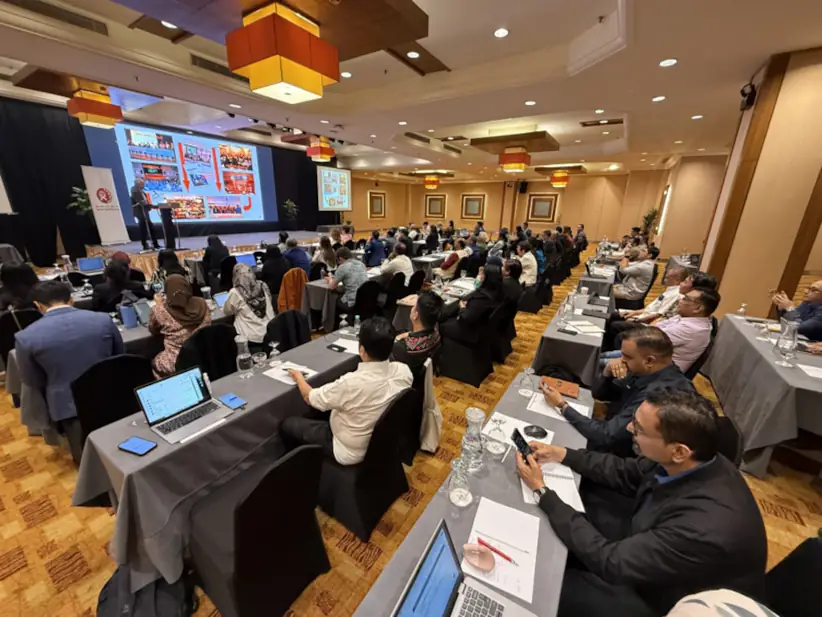 Delegates listening attentively to the presentation by Sugio Furuya. Picture courtesy of ABAN. |
Topics covered during the two-day event included:
- the tragic reality of Asian asbestos victims and their families;2
- the empowerment of victims and their families and the vital role they play in national and regional campaigns;
- addressing the unmet needs of victims for moral, financial and psychological support;
- the importance of labeling products to increase asbestos awareness of workers, consumers and the public;
- risk mapping as a tool for making asbestos issues visible;
- the role of occupational and public health professionals in raising the alarm about the asbestos hazard;
- strategies for countering disinformation, neutralizing industry tactics and building grassroots support;
- the availability and implementation of tools for collecting evidence of the economic viability, social desirability and medical necessity for phasing-out asbestos use.3
According to colleagues who attended the conference, great enthusiasm was generated by the presentations with a high level of engagement by all the participants; dynamic plenary sessions, interactive panels, interventions from delegates and break-out groups over-ran as discussions flourished on subjects of common interest. These conversations continued in social settings long after the formal sessions for the day had ended.
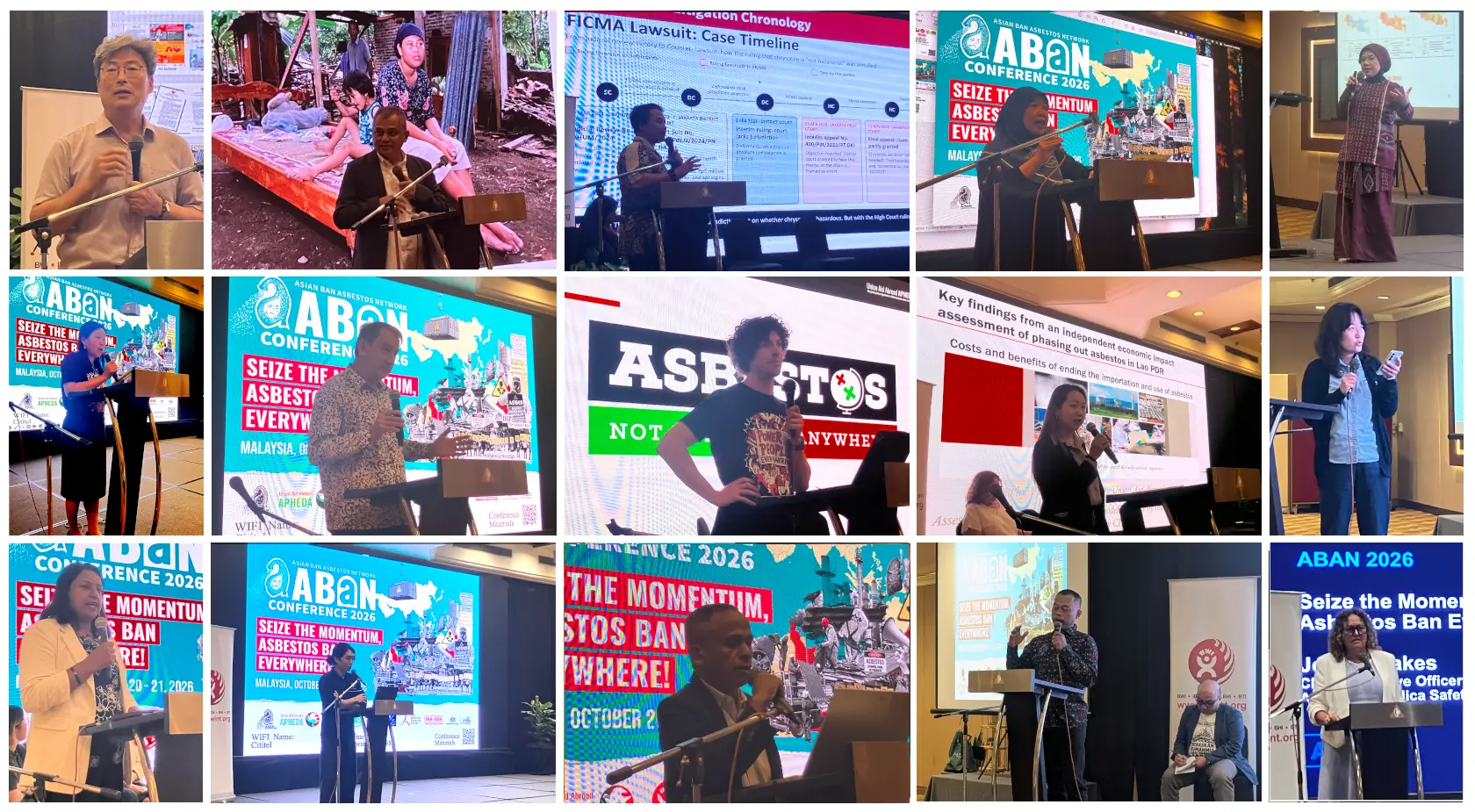 ABAN plenary session speakers (Enlarge this image (block)). Photos courtesy of ABAN: Top row, from left: Dr Yeyong Choi (South Korea), Mr Wahyu Widayanto (Indonesia), Mr Dhiccy Sandewa (Indonesia), Ms Prihanani Boenadi (Indonesia), Dr Anna Suraya (Indonesia). Middle row, from left: Ms Chamrong Chuon (Cambodia), Phillip Hazelton AM (Australia), Adam Kaminiski (Australia), Ms Vilada Phomduangsy (Laos), Ms Joeng Hee Han (South Korea). Bottom row, from left: Ms Doris C. Javier (Philippines), Yan Ke Wong (Malaysia), Mr Robertos Gusmao (Timor Leste), Mr Adi Hariyanto (Indonesia), Jodie Deakes (Australia). |
Panel sessions provided ample opportunity for multiple voices to be heard during the plenary discussions as did interventions from the floor which allowed delegates to clarify specific details from presentations and comment on related topics.
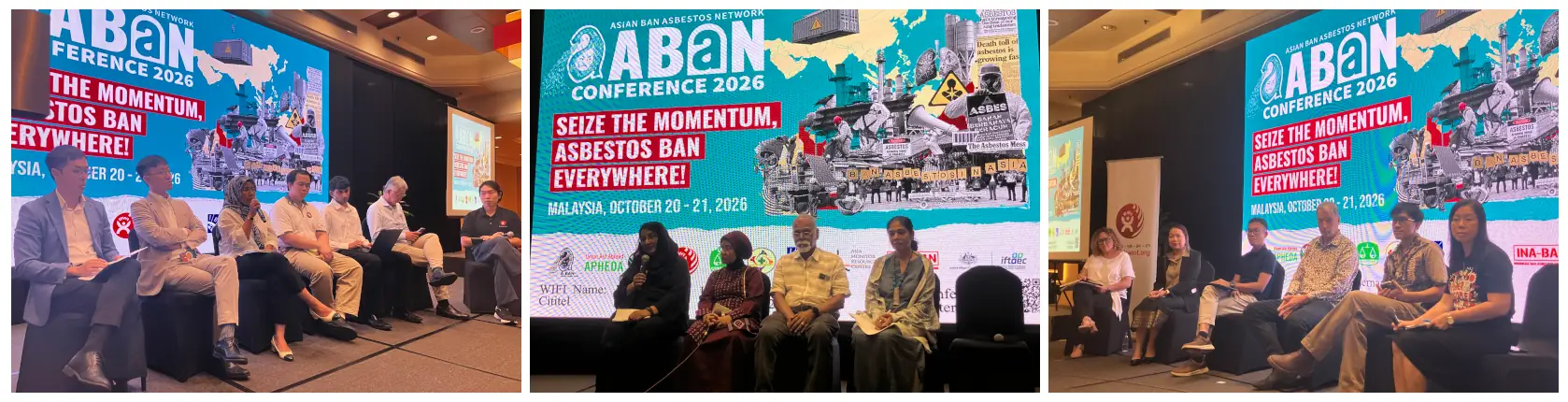 Panel sessions (Enlarge this image (strip)). Photos courtesy of ABAN. |
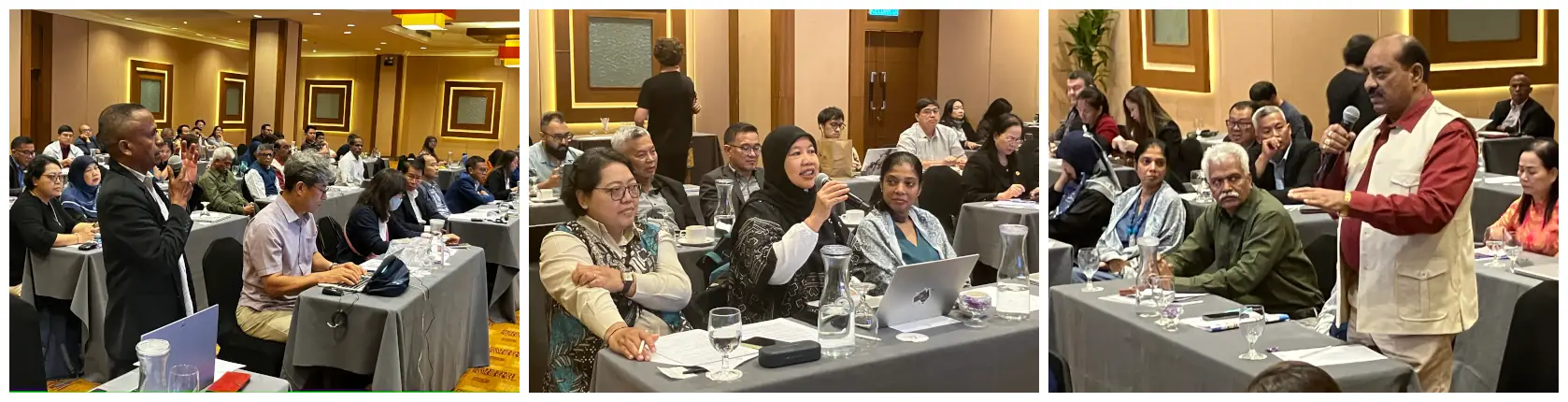 Interventions from the floor (Enlarge this image (strip)). Photos courtesy of ABAN. |
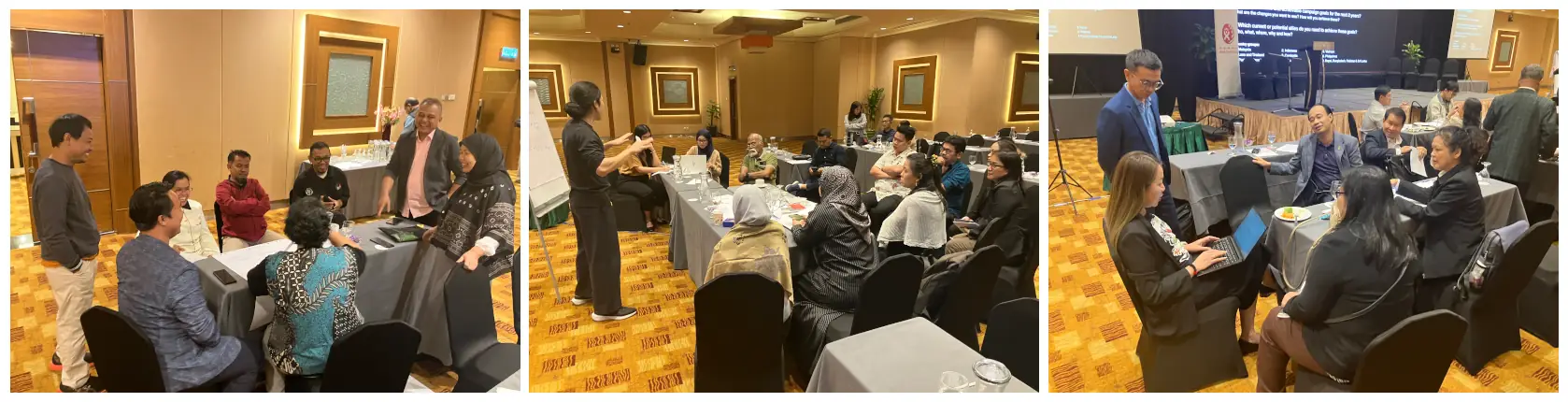 During brainstorming during break-out sessions, ABAN delegates considered future goals, strategies and collaborations (Enlarge this image (strip)). Photos courtesy of ABAN. |
Commenting on the conference, ABAN Coordinator Sugio Furuya said:
“This event marked a resurgence in the ban asbestos campaign with a whole new generation of younger activists rallying to the cause. It is no wonder, considering the huge pressure being exerted by the asbestos lobby which is fighting tooth and nail to prevent government restrictions such as the labeling of asbestos-containing products.
The momentum supporting an end to the asbestos slaughter in Asia was undeniable. The voices of victims’ from new ABAN members enriched the discussions and news that punitive legal actions by the asbestos lobby in Indonesia had been defeated by a recent ruling of the Supreme Court was greeted with rapturous applause. Insightful contributions from the excellent panel of speakers kicked off wide-ranging debates about national and regional goals and collaborations. I am no doubt that these discussions will continue in the days, weeks and months to come. After months of pain-staking planning and consultation with ABAN colleagues, I can reassure all our partners that this was one of ABAN’s most impactful and productive meetings.” 4
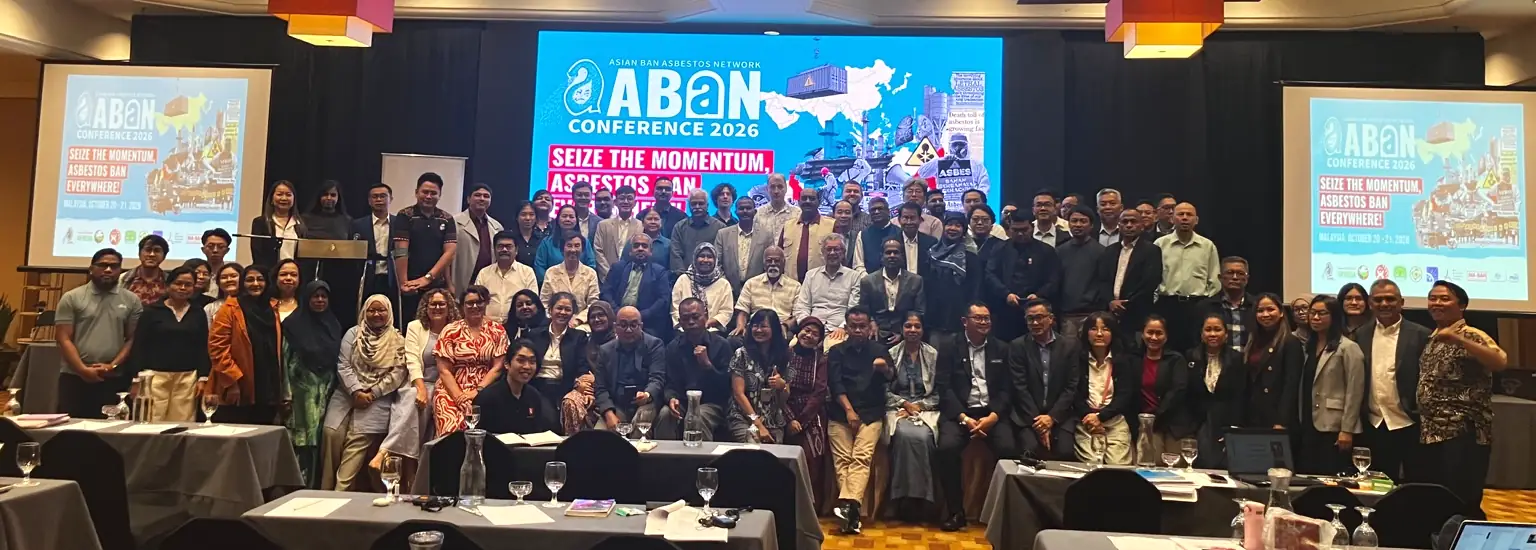 Group photo of ABAN 2026 Conference, October 20, 2026, Kuala Lumpur, Malaysia (Enlarge this image). Photo courtesy of ABAN. |
At the final session of the first day, presentations were made in recognition of significant achievements by ABAN members as follows:
- The International Ban Asbestos Secretariat (IBAS) Award for Outstanding Grassroots Mobilization 2026 to the “Asbestos. Not Here, Not Anywhere” campaign of Australia’s Union Aid Abroad – APHEDA.
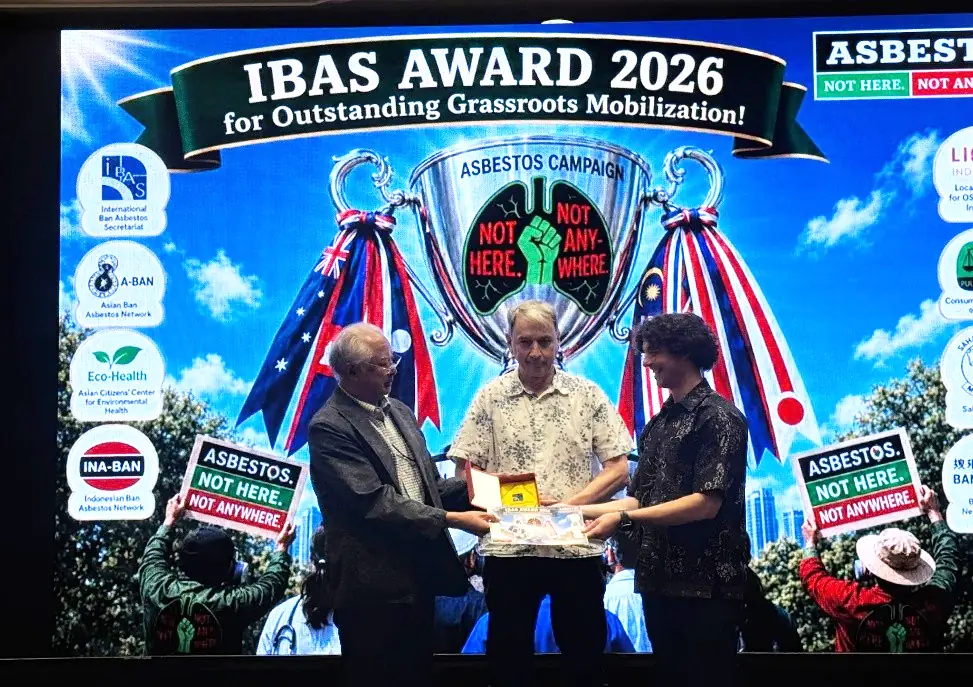 ABAN Coordinator Sugio Furuya presenting the IBAS award to APHEDA’s Phillip Hazelton and Adam Kaminski. Photo courtesy of ABAN. |
- The ABAN 2026 “Dare to Struggle, Dare to Win Award” was shared by the Local Initiative for OSH Network (LION) and the Indonesian Ban Asbestos Network (INA-BAN).
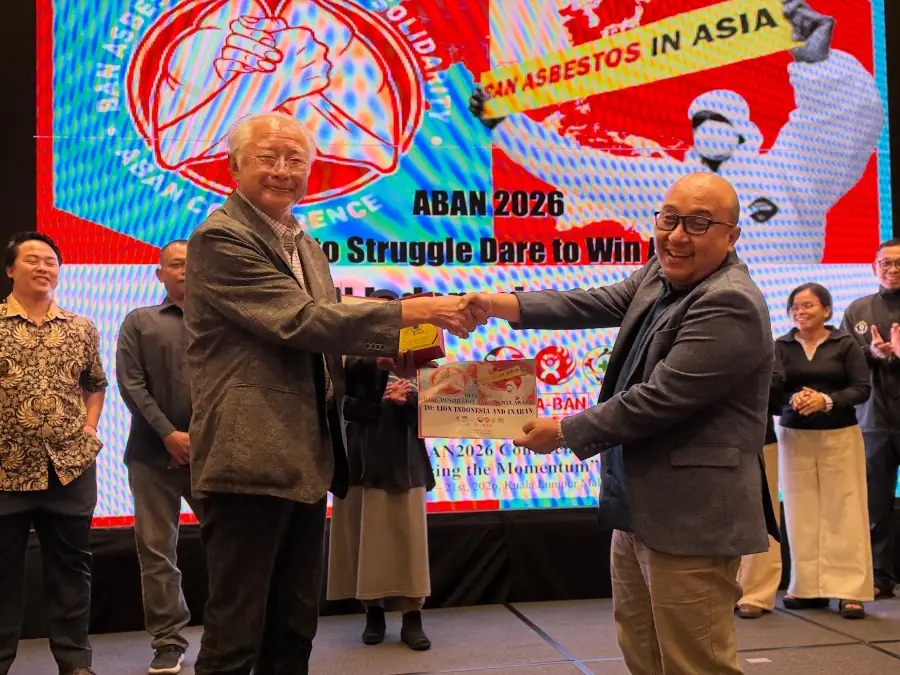 Sugio Furuya presenting the ABAN Award to Surya Ferdian, LION/INA-BAN, Indonesia. Photo courtesy of ABAN. |
- What Sugio did not know until October 20th was that a secret award had been planned to recognize his outstanding efforts as the ABAN Coordinator since its founding in 2009: The ABAN Lifetime Leadership Award.
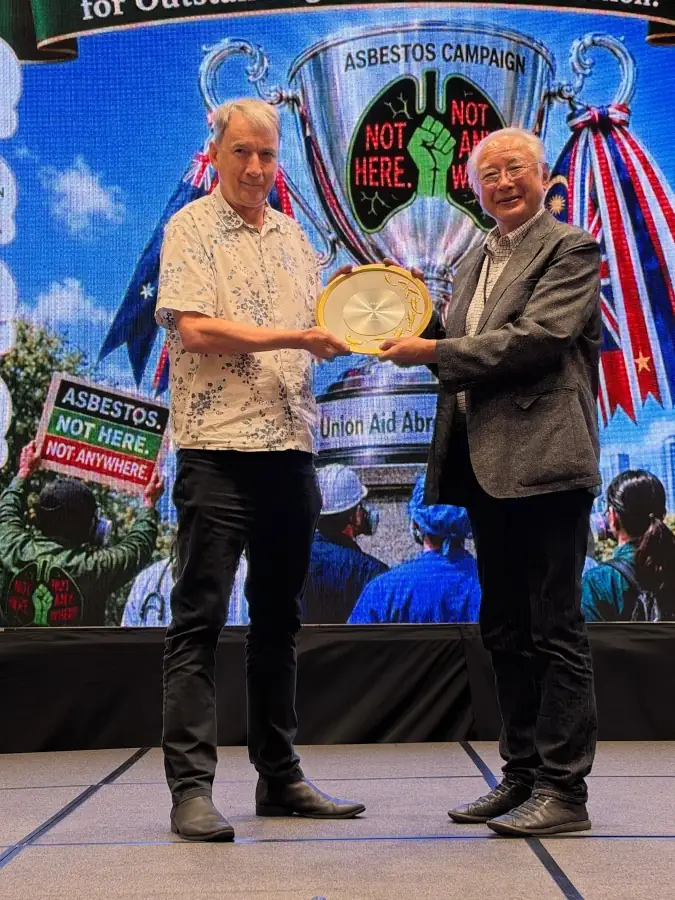 Phillip Hazelton presenting the award to a startled Sugio Furuya. Photo courtesy of ABAN. |
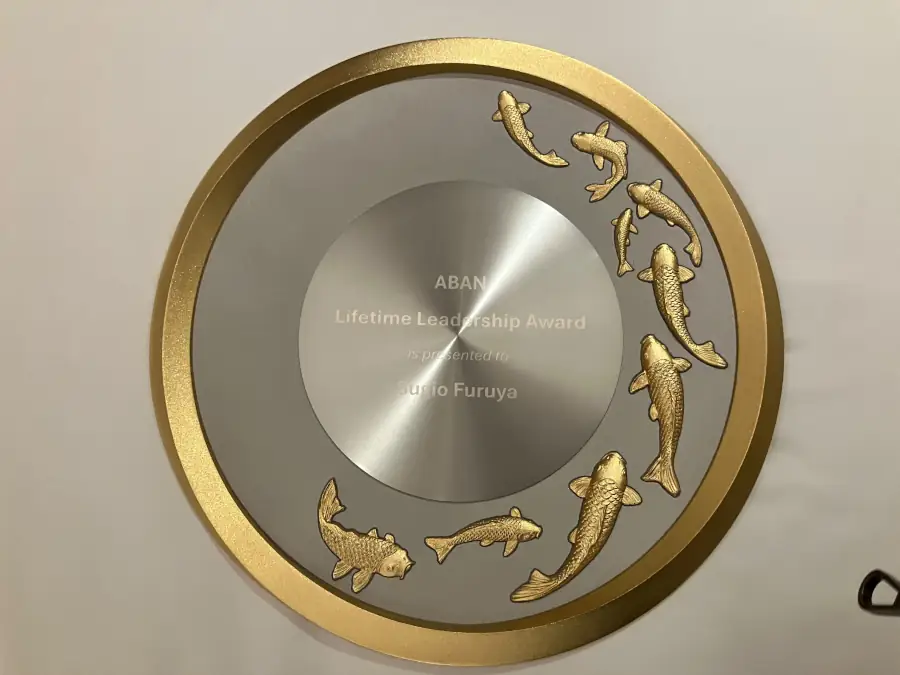 |
Choosing the design for the award was difficult as there were so many wonderful options presented by colleagues in Malaysia. In the end it was decided to go with the one above as the koi symbolize perseverance, strength and courage, all of which Sugio has in abundance.
The final agenda item of the conference was the discussion and adoption of the draft conference statement.5 The text approved by ABAN delegates asked: “Why is Asia the last region in the world to stop importing toxic asbestos to use in manufacturing in any real quantity? At what cost to public health, the economy and the environment?”
Having recapped the region’s progress in transitioning away from asbestos in 2026, the final communique made recommendations as follows:
Global:
- The International Finance Corporation and the World Bank should “immediately prohibit asbestos containing materials from their supported investments.”
- Parties to the Rotterdam Convention need to be proactive in resolving industry’s 20-year veto on UN action on asbestos.
Regional:
- Closer collaborations by the ITUC-AP with authorities at local, national, regional and global levels were encouraged to progress the transition away from asbestos and the improvement of occupational protections throughout Asia-Pacific.6
National:
- Malaysia: the government should take immediate action on implementing plans to ban the use of all types of asbestos, including chrysotile (white) asbestos.
- Malaysia: all the parties participating in upcoming national elections were urged to endorse a unilateral asbestos ban in their political manifestos.
- Indonesia: The ITUC-AP was encouraged to support Indonesia’s campaign for the transition to asbestos-free technologies in the face of industry’s massive misinformation campaign.
Concluding Thoughts
There is no doubt that recent successes achieved in the Philippines, Indonesia, Cambodia, Malaysia, Fiji, Vietnam and Laos will be followed by breakthroughs elsewhere in Asia. The asbestos industry’s stranglehold on national asbestos dialogues has been shattered as new voices ask “Why is Asia the last region in the world to stop importing toxic asbestos to use in manufacturing in any real quantity? At what cost to public health, the economy and the environment?” Until all Asian countries ban asbestos and take action to support the injured, ABAN members will continue to ask these questions! The struggle continues.
November 2, 2026
_______
1 Co-organized by Asian Ban Asbestos Network (ABAN), International Ban Asbestos Secretariat (IBAS), Union Aid Abroad APHEDA, Asia Monitor Resource Centre (AMRC), Building and Wood Workers’ International (BWI), Asbestos-Free Malaysia Network, Health and Safety Advisory Centre (HSAC), Consumers’ Association of Penang (CAP) and Indonesia Ban Asbestos Network (InaBAN).
2 Music: He Fades Away by Alistair Hulett; images of ABAN members and activities collected by colleagues in Indonesia.
https://www.youtube.com/watch?v=WCxfoV0W8II
3 The Asian Citizens’ Center for Environmental Health. [2026년10월20일] 아시아석면추방네트워크 말레이시아 회의를 시작하며 울컥하다 [[October 20, 2026] Overcome with emotion as the Asian Ban Asbestos Network meeting begins in Malaysia.] October 20, 2026.
https://eco-health.org/bbs/board.php?bo_table=sub09_04&wr_id=646
4 Email from Sugio Furuya. October 23, 2026.
5 Asian Ban Asbestos Network 2026 Conference Statement. October 21, 2026.
https://ibasecretariat.org/aban-conference-2026-final-statement.pdf
6 ITUC-AP is the International Trade Union Confederation (ITUC) of trade unions across the Asia-Pacific region. It had an asbestos meeting in Jakarta, Indonesia on October 23 and 24, 2026.
